Keynotes
Alessandro Bosetti
Teaching a voice to speak ‘language’
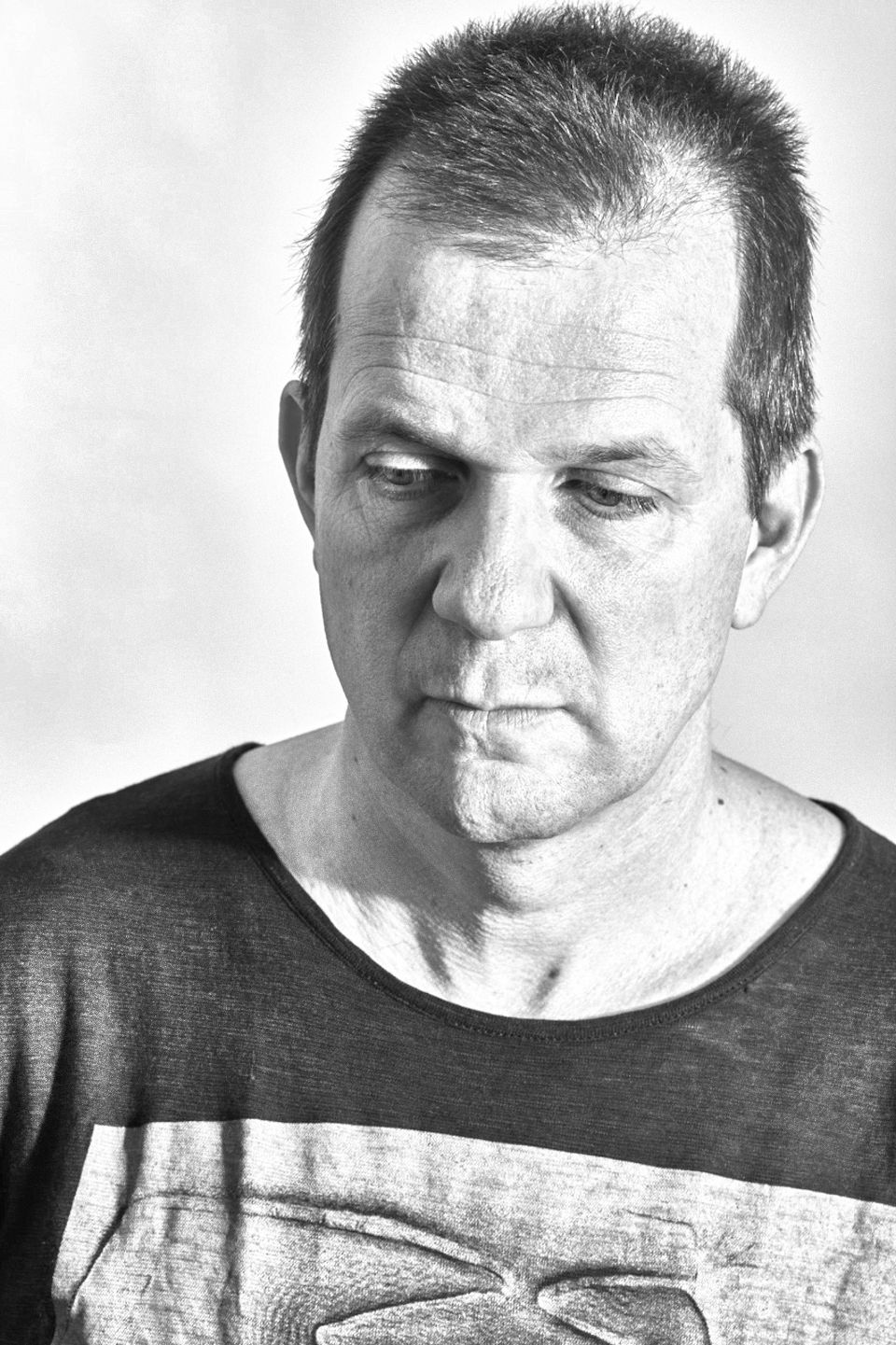
Photo: Jeanchristophe Lett
Let us imagine for a moment that each voice is a living being, completely autonomous from the person who emitted it. Let us also imagine that this strange being harbors within itself a powerful desire to learn a language—an idiom which, for convenience, we will call language—and that there was, or has been, a moment in every voice’s life when it did not know, or did not yet know, how to speak language. If we take such a voice in its pre-language state and break it into pieces, reduce it to tiny fragments, and if we take those tiny fragments into our hands and observe them, feel their color, their temperature, we notice that they contain a mysterious energy, a kind of electric charge, which, without our being able to say whether it is hot or cold, sweet or salty, makes them appear “charged”, full of potential and desire.
Now, if we wanted to take care of such voices, we would face the question of how to teach them to speak language. We might even feel inclined to make this gift, to welcome them into the world and make their existence—amidst a multitude of other voices that already know how to do this—easier, or—using an expression in language—more articulated.
Yet, the point of this reflection is rather to remind us that perhaps there are voices that have no desire at all to learn to speak language, and that perhaps it is they who, holding us—not literally in their hands, for they have no hands, but in some other way that is theirs—wish to take care of us and teach us to feel something that, for us, who for the moment speak and think almost exclusively language, might resemble being something else: savoring the taste of a question, inhabiting a forgetfulness, delighting in a misunderstanding, conjugating the proximity of a being, and other things of this kind.
Composer and sound artist, Alessandro Bosetti explores the musicality of language and the voice conceived as an autonomous object, as well as the relationships between sound and memory. He designs singular dispositifs, often linked to the radio medium, and develops a line of inquiry that questions listening in its postures and aesthetic categories. Among his recent works are the anonymous voice archives Plane/Talea, the digital ventriloquism device MaskMirror, and a research project focused on a sonic mnemonic, pursued through performances such as La memoria risiede nel lobo dell’orecchio. His practice draws on a range of techniques—radio art, contemporary composition, vocal polyphony, and conceptual gesture. At the core of his work lies encounter, particularly conversation and the interview, understood as dispositifs that are both generative and performative. Sound and voice thus become both the site and the material of a possible ecology of encounter and memory. Programmed at festivals such as the Festival d’Automne in Paris, the Musica Festival in Strasbourg, the GRM’s Présences Électroniques Festival, Liquid Architecture in Melbourne, and the San Francisco Electronic Music Festival, Alessandro Bosetti’s music has been widely published by labels and publishers including Three:Four Records, Errant Bodies Press, Les presses du réel, Holidays Records, Kohlhaas, Unsound, and Monotype. Alessandro lives and works in Marseille.
Kerstin Ergenzinger
Playing Grounds
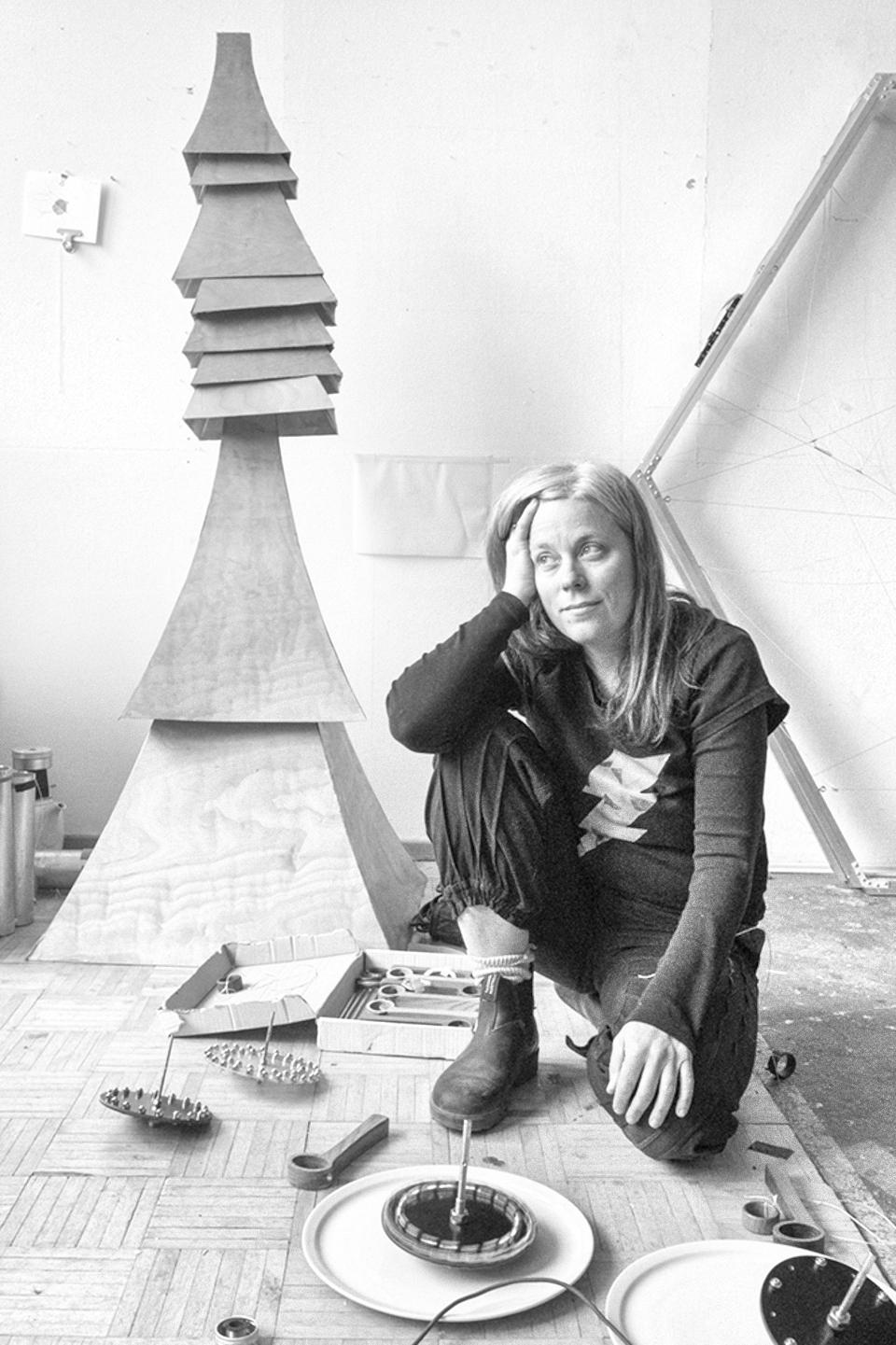
Photo: Lena Loose
This lecture unfolds as a performative playground talk—an invitation to think, sense, and act through artistic instruments: musical, kinesthetic, spatial, and visual. It approaches these instruments as modes of experiential research, using play as a method to engage with materiality and the thresholds of perception, and opening a space for shared inquiry and dialogue.
Kerstin Ergenzinger is a sonic and visual artist and
Junior Professor of Acoustic Ecologies and Sound Studies at Bauhaus
University Weimar (DE). She works across the fields of sound, sculpture,
kinetics, light and drawing and explores the diversity of sensory
ecologies and the possibilities of tuning into the differences of the
world.
Kerstin is co-founder of the Sono-Choreographic-Collective for
transdisciplinary art and research, which develops and explores new
somatic and musical research instruments together with alternative ways
of playing, writing and interdisciplinary choreography. Moreover, she
co-edited the volume Navigating Noise (Walther König, Berlin):
a collection of academic and artistic contributions, that addresses the
need for alternative means of orientation to deal with noise. She was fellow
at the Berlin Center of Advanced Studies of the University of the Arts
Berlin and associated artist with the quantum-optical research project
nuClock. Her current research focuses on sonifying and personifying
environmental data together with live listening to environments over
longer periods of time. One important question is how a long-term
collaboration between sonic arts and climate science can be translated
both in cross-disciplinary dialog and joint action and in public
experiences that offer connections to the fragile complexity of
planetary systems.